



Airflow Mixer
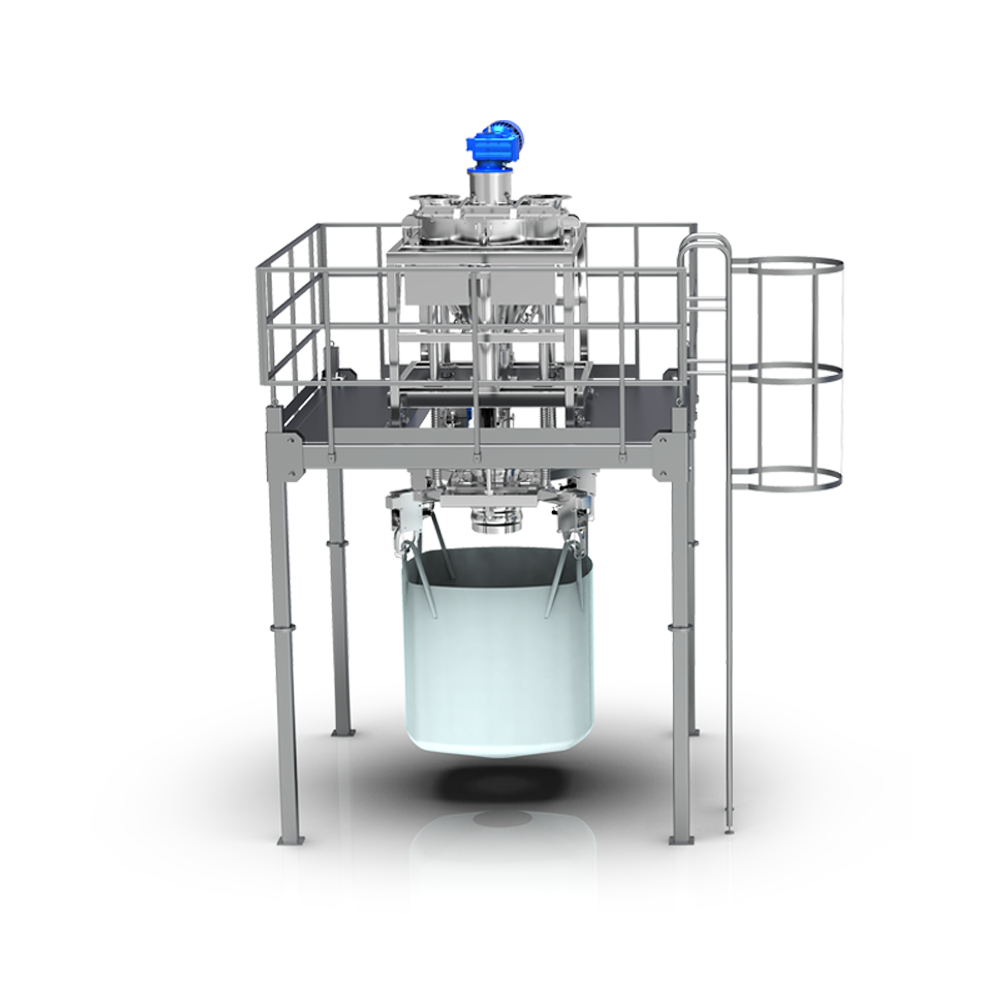
The Airflow Mixer operates primarily on the principles of pneumatic conveying and airflow turbulence. The system utilizes a high-pressure blower or compressor to generate high-velocity airflow, which conveys materials into the mixing chamber. Within the chamber, the high-speed airflow suspends materials and creates intense turbulence, enabling particles to collide and diffuse under aerodynamic forces, thereby achieving homogeneous blending.
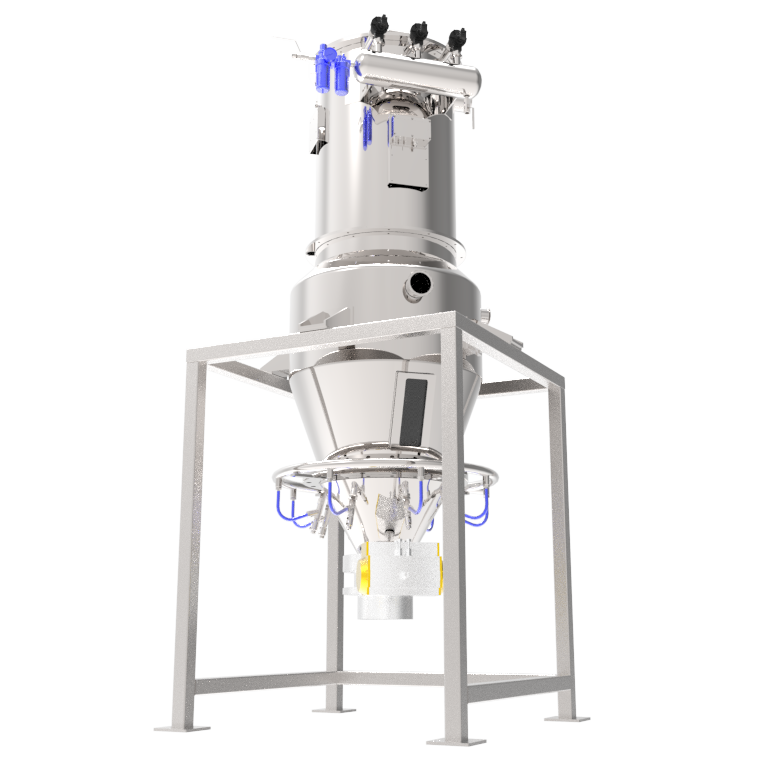
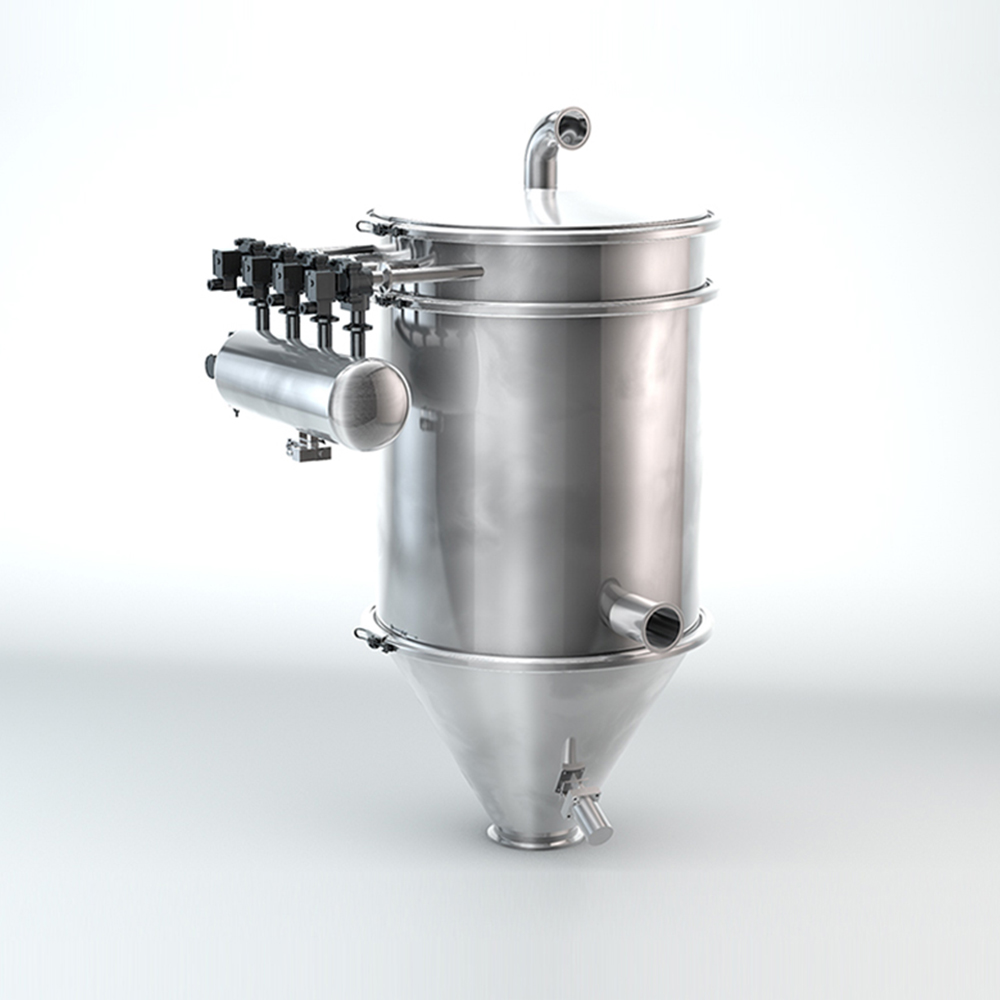
1. Negative Pressure Feeding: Materials are sucked into the mixing tank through the positive pressure conveying system or vacuum feeder. With real-time monitoring of the sensor, the equipment automatically stops material suction and breaks the vacuum status when the preset amount is reached. 2. Pneumatic Fluidized Mixing: The compressed air passes through the air intake component (annular pipe) and rushes in the mixing tank through high-pressure nozzles evenly distributed at the bottom of the silo. Then the air lifts the materials instantly and makes them turn and collide violently. The compressed air expands and depressurizes, which causes the materials to settle, thereby completing one mixing cycle. After a short system pause, the airflow pulse is started again to achieve uniform mixing after repeated cycles. During this process, the vacuum feeder changes into a dust collector at the silo top, maintaining stable pressure and purifying the environment. 3. Material Discharge: After the cylinder pushes the conical discharge valve upward, the mixed materials come out from the material outlet under gravity, thus completing the discharge process
-
 Integrated Functions to Reduce PollutionThe equipment integrates three major functions of vacuum conveyance, dynamic mixing, and clean emission to reduce material transfer, effectively reducing the risk of cross-contamination by 40%.
 -
 Efficient Mixing to Improve CapacityAdjustable pulse frequency shortens mixing cycle to 2-60 min/batch; The total silo volume is 0.3m³-150m³, with volume efficiency reaching 20-65%.
 -
 Uniform Mixing to Ensure QualityCFD is used to optimize the three-dimensional flow field, so that materials can be fully blended in the complex and orderly airflow, achieving highly uniform mixing to ensure stable product quality.
 -
 Care for Materials to Reduce DamageDrive mixing with airflow instead of mechanical stirring mode, which effectively protects heat-sensitive and vulnerable materials, thus broadening the range of applicable materials for the equipment.
 -
Convenient Maintenance & Cost SavingModular quick-release design with Mean Time To Repair (MTTR) less than 15 minutes, reducing downtime and maintenance costs.
-
Pharmaceu-tical IndustryThe equipment is suitable for mixing, emulsifying and blending pharmaceutical raw materials to avoid pollution and thermal degradation, thus meeting pharmaceutical quality standards.
-
Food IndustryThe machine is suitable for mixing all kinds of food materials and ensure the hygiene of the mixing process with food-grade material.
-
Chemical IndustryUsed for mixing a variety of chemical raw materials, the equipment adjusts parameters according to material characteristics to ensure safety and product quality.
-
New Energy IndustryDesigned for mixing battery materials, photovoltaic materials and other new energy materials, ensuring uniform mixing, high efficiency and material purity to enhance product performance.